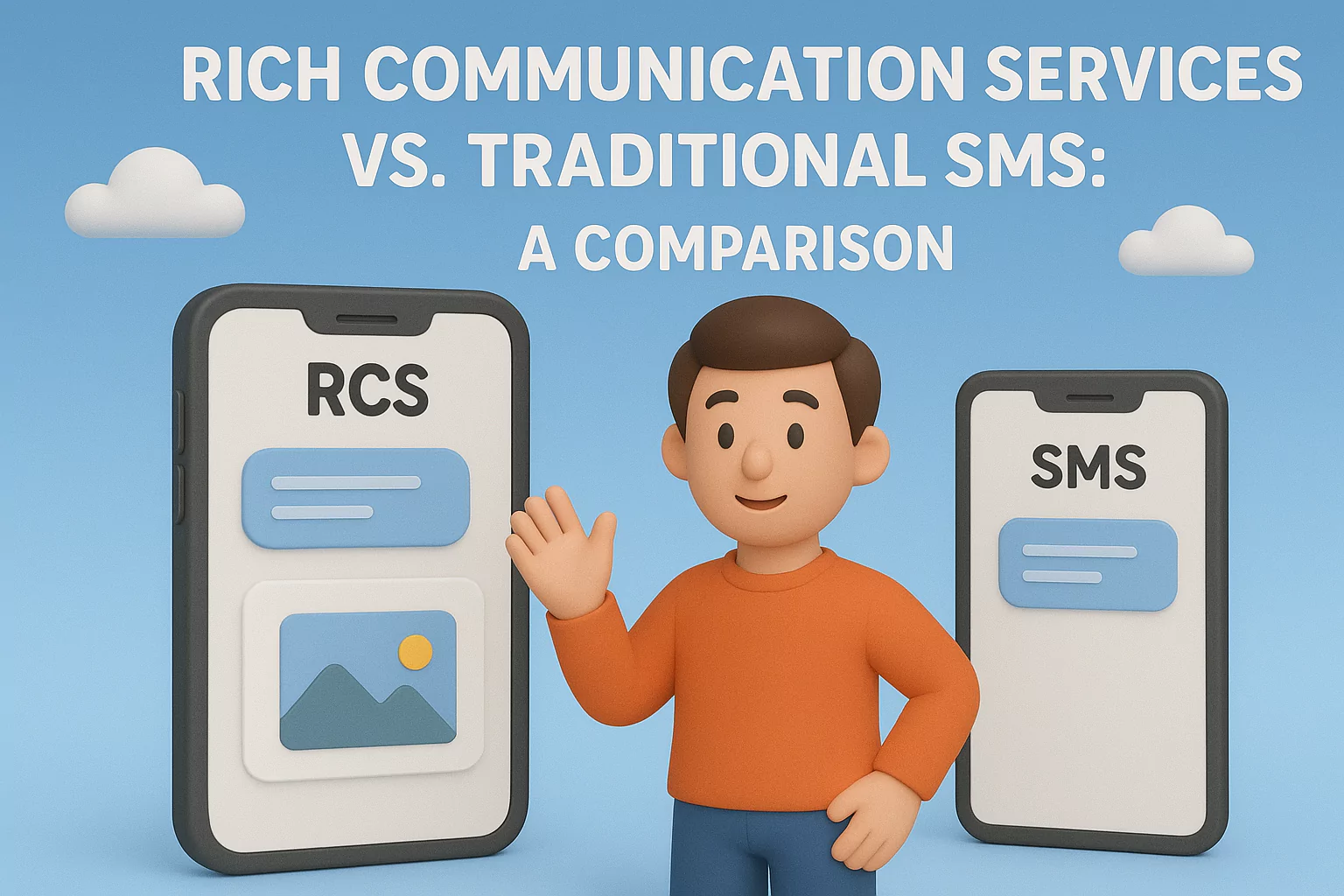
Rich Communication Services vs. Traditional SMS: A Comparison
SMS (Short Message Service) has been the pillar of mobile communication for many decades. SMS is the easiest tool for communicating with people, whether used in personal communications, alerting, or business advertising. However, with smartphone usage and the desire to have more engaging interactions, there has been the introduction of the new platform known as Rich Communication Services (RCS). RCS adds a new dimension to messaging as it incorporates multimedia, interactivity and brand-related capabilities. In this blog, we will compare RCS and regular SMS, outlining their advantages, distinctions and how businesses can decide on using the right solution under SDGM Technologies.
Understanding Traditional SMS
SMS is among the first mobile messaging systems, which was launched in the early 1990s. It can work with nearly all mobile devices and is not tied to the internet. This qualifies it as a reliable device to transmit short messages in real time. The major advantages of SMS are the fact that it is compatible universally, it is cheap, and it is reliable.
Businesses prefer to use SMS to do the bulk alerts, OTPs, and the time-critical notifications since messages reach a recipient very quickly. SMS, however, has its limitations. It does not have multimedia capabilities, and a character limit of 160 is too small in the current digital world. Businesses are not able to attach pictures, logos, interactive buttons, and so on, i.e. There is a lack of engagement in SMS as compared to newer solutions.
What is Rich Communication Services (RCS)?
The RCS is the future of messaging that is intended to supplant the traditional SMS. It employs mobile data or Wi-Fi as a way of providing high-end communication features. Unlike SMS, RCS gives businesses and users the ability to send images, videos, carousels and interactive buttons in their messages.
RCS has such standout features as read acknowledgement, indication of who was typing, group messaging, and branded messaging with verified sender IDs. These make the conversations more interesting and credible. To businesses, RCS is an opportunity to create eye-catching campaigns, which move beyond text messages.
RCS is being implemented by telecom providers across the globe; with the help of Google and Android devices, it is gaining increased popularity. The rollout of RCS has been slowly changing the manner in which brands reach out to their audiences.
Key Differences Between RCS and SMS
Message Format & Features
SMS is text only. RCS allows high media content such as pictures, videos, and quick reply buttons.
Reach & Compatibility
SMS is compatible with all mobile devices, including the basic feature phone. RCS, on the other hand, needs network connectivity and support of carriers; these features restrict its present coverage in certain areas.
Engagement
SMS is to the point and straightforward. The RCS supports interactive campaigns, providing an opportunity to create better connections between business and customers through eye-catching messages.
Security
SMS has limited encryption and is thus not preferable. RCS carries with it additional security features such as sender verification that lessens spam and fraud.
Business Use Cases
SMS is best to use as alerts, OTPs, and emergency notifications. RCS is perfect when used to carry out marketing campaigns, engage customers, and offer personalised promotions.
Generally, SMS has an eye on reach and simple utilisation, whereas RCS has one on experience and interaction.
Advantages of RCS Over SMS
RCS has a list of advantages that make it more attractive to contemporary enterprises:
- Enhanced Experience: A visually stunning message is delivered to customers rather than simple text.
- Brand Trust: Verified sender IDs and logos give more trust to the customers.
- Interactive Campaigns: Businesses can include buttons to book, shop or contact customer support.
- Better Tracking: Reading receipts and delivery reports helps brands gain more accurate measurements.
It is evident that RCS has more options to increase engagement rates by businesses than traditional SMS.
Where SMS Still Works Better
Although RCS gains popularity, SMS is not on the exhaustion list yet. Its universal usability renders it indispensable in a number of instances.
- Does not require internet or smartphones, so it can reach those in rural areas as well.
- Is cheaper and the best alternative to use when sending bulk alerts and OTPs.
- Ideal in time-sensitive messages such as emergency messages, payment reminders and government messages.
- Provides an effective backup in case the customers lack RCS support on their devices.
That is why organisations still use SMS as one of the means of communication or in conjunction with new options.
Choosing the Right Option for Your Business
Deciding between SMS and RCS depends on several factors:
- Who is your target audience?
- Do they live in regions with strong internet and smartphone usage?
- What is your campaign budget?
- Do you want rich customer engagement or simple alerts?
A hybrid solution is the most effective when SMS is used as a standard communication method and RCS is used when running campaigns. SDGM Technologies can assist your business in implementing these two options to allow reaching customers in the most effective way possible.
Future of Messaging: SMS vs. RCS
The question of the future of mobile messaging does not rely on asking one to substitute the other. SMS and RCS are, however, most likely to co-exist. Other SMS will still be used widely as a reliable method, particularly for sensitive communication. Meanwhile, RCS will be expanding as additional telecom operators and businesses incorporate it into the field of rich interactive messaging. Collectively, they will create a complete messaging ecosystem which can be tapped by businesses for various requirements.
Conclusion
Both SMS and RCS are useful in business communication. SMS is easy, predictable, and accessible to any corner of the globe, whilst RCS is engaging, interactive, and brand-orientated. A mix of the two, with regard to audience and intentions, should be used by businesses that wish to remain on the cutting edge. The right messaging strategy will help you develop a strong relationship with your customers, and with SDGM Technologies you can ensure it.