
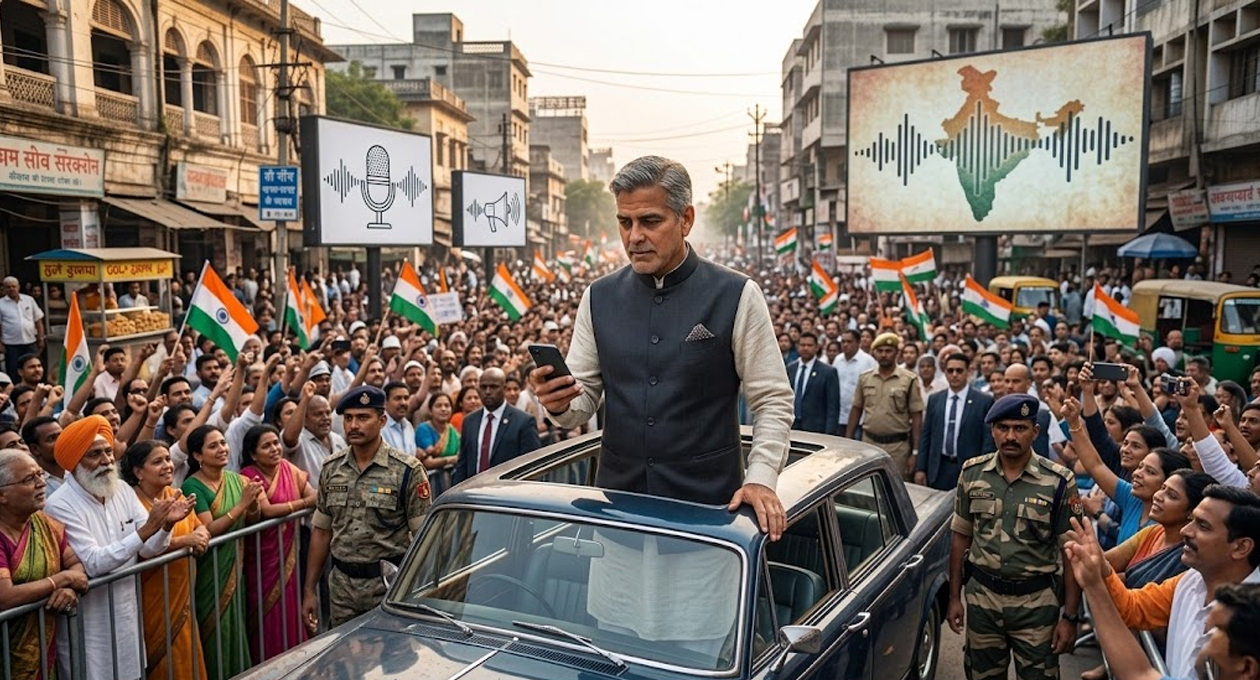
What Is a Political Voice Campaign Service and How Does It Work?
Getting to one lakh voters by doing footwork requires weeks of planning, hundreds of volunteers, and financial resources that most campaigns simply cannot afford. The political voice campaign service does this in a matter of hours, using the candidate's own voice in the language of the voter on a cell phone the voter already holds in their hands. That is why voice broadcasting has emerged as such a popular tool in Indian election campaigning.
Every successful modern campaign relies on this technology to scale personal interaction without scaling the human cost.
What a Political Voice Campaign Service Is
It is a cloud service that delivers pre-recorded phone calls to millions of phone numbers all at once. The politician or campaign group records their message, inputs their voter database, schedules when to deliver, and the rest is taken care of by the platform. It dials all the numbers, leaves a message for each of them, and gives real-time reports.
There is no need for any form of equipment. It does not require a large group to manage its functions. The campaign manager can perform a voice blast across the whole state from a single screen.
How It Works Step by Step
Step 1: Record the Message
The candidate creates the voicemail message that is usually between 30 to 60 seconds long. The message can be recorded via the system, attached as a file, or even generated using speech-to-text technology. Messages that are delivered in the candidate's own voice are more memorable than narrator-created messages.
Step 2: Upload and Segment the Voter List
The voter data is uploaded into the campaign database and segmented based on any available parameters like the region, language, age group, etc. The message sent to a mostly farmer-based rural constituency will focus on farm policy, while that sent to an urban constituency with young voters will address employment and infrastructure.
Step 3: Schedule the Campaign
The system enables campaigns to schedule messages for their release on certain days and at certain times. The morning call is made between 8:00 and 11:00 in the morning and it reaches the highest number of voters at home. The pre-rally call is made one day before the rally. The turnout call is made early in the morning on election day.
Step 4: Launch and Monitor in Real Time
As soon as the campaign starts rolling out, all numbers will be dialed at once, and the message will be delivered upon answering. Campaign administrators will then monitor the delivery rate, answer rate, time spent calling, and regional performance statistics from a live dashboard, which can help them know which segments require follow-up and which messages perform best.
Step 5: Collect IVR Responses
Interactive Voice Response enhances the one-way communication into a two-way conversation. Once the candidate's speech is completed, the citizen is asked to push a number in order to answer a question, attend the rally, express his or her opinion concerning some particular policies, etc. The collected information is transmitted in real time to the campaign team without conducting any field research.
What Political Parties Use It For
- Manifesto delivery: The main pledges made by the candidate personally to every individual registered voter in their own language
- Rally invitations: Personal invitations from the candidate are far more effective at bringing people to events than invitations sent in print or through the Internet
- Coordination for volunteers and party workers: Communication internally to ensure that volunteers are always informed about scheduling, booth information, etc., without needing to be present physically
- Voter Turnout: On the polling day, timely reminder calls about booth address, voting time, and the significance of their vote are sent to mobilize voters
- Survey and Feedback Collection: With IVR, campaign managers can take opinion polls for thousands of voters within one hour
- Message of Gratitude and Relationship Building: Thank you calls by the candidate after elections or rallies can be made to maintain a long-term relationship with the voter
Why Voice Works Better Than Text In Indian Elections
India's political geography, in particular, makes voice campaigns structurally more effective than SMS or online advertisement in a number of cases :
- Voters owning simple cellphones without internet facilities still get the call.
- Localized recordings in local languages reach voters in their native tongues, something that text-based campaigns can never do.
- The voice of the candidate generates a connection and an emotional response that cannot be achieved through writing.
- Senior citizens who do not use social media and ignore text messages will respond much better to voice messages.
- Voice messages are more memorable than text messages; this becomes increasingly important when a voter receives communications from several different sources at once.
Compliance Requirements in India
A campaign for any political voice should be conducted under rules set by the Election Commission of India as follows:
- Campaigning via calls should cease during the silence period, which lasts up to 48 hours before polling
- No calls from 9 PM to 8 AM
- Content should adhere to the Model Code of Conduct and must refrain from defamatory or false statements.
- Campaigns should respect all opt-outs.
- All voice broadcasting is done via registered telecommunications facilities.
Failure to comply may result in the revocation of content, complaints, and reputational risks of being involved with electoral misconduct.
The Bottom Line
The key advantage of a political voice campaign service is placing the voice of your candidate directly into the ears of the electorate on a grand scale, using their own language, and at exactly the right time in the electoral cycle. There is no other medium that combines this personal approach to communication with such wide coverage and cost-effectiveness.
As SDGM Technologies , we offer you political voice campaigns tailor-made for the pace of Indian elections, including multi-lingual recording services, voter list segmentation, IVR surveying, delivery analytics, and Election Commission-compliant messaging all the way to each individual voter before the election polls open.
FAQs
Q: Can a campaign be run in multiple languages simultaneously?
Yes. Different recordings are created for different languages and provided to voter lists grouped according to language or geography. The same campaign can have separate recordings for Marathi, Hindi, and English, and each of the voters gets his/her version of the recording.
Q: How quickly can a campaign be launched after the message is recorded?
A campaign can be up and running within hours of setup, using a pre-made voter list and a pre-approved audio file. All the leading enterprise platforms provide a same-day campaign launch facility during elections.
Q: What is the ideal length for a political voice call message?
From 30 seconds to 60 seconds. Any message over 60 seconds will receive decreasing listenership numbers. The ideal script format begins with an introduction of the candidate, addresses only one or two issues, and concludes with one action item.
Q: How does IVR feedback work in a political voice campaign?
Following the primary message, the voter is required to enter an option by pressing a digit on the keypad following a question. For instance, pressing digit 1 in confirmation that you attended a rally or pressing digit 2 to show your interest in a certain policy.